
The principal that decisions regarding conservation and management of living marine resources should be based on the ‘best available scientific evidence’ (BASE) is enshrined in the UN Convention on the Law of the Sea (UNCLOS) (United Nations 1982) for both EEZs and the High Seas.
Countries and their regional organisations are legally obligated to operationalize this principle. Nonetheless, there is considerable room for interpretation of the meaning of ‘best’ and ‘available’. Even with the best intentions, managers have found many challenges to developing, obtaining, and using the best available scientific evidence. These challenges range from low capacity to produce or access relevant scientific evidence, through poor communication of science to decision makers, to governance processes that are poorly structured or inadequately structured for the uptake of scientific advice.
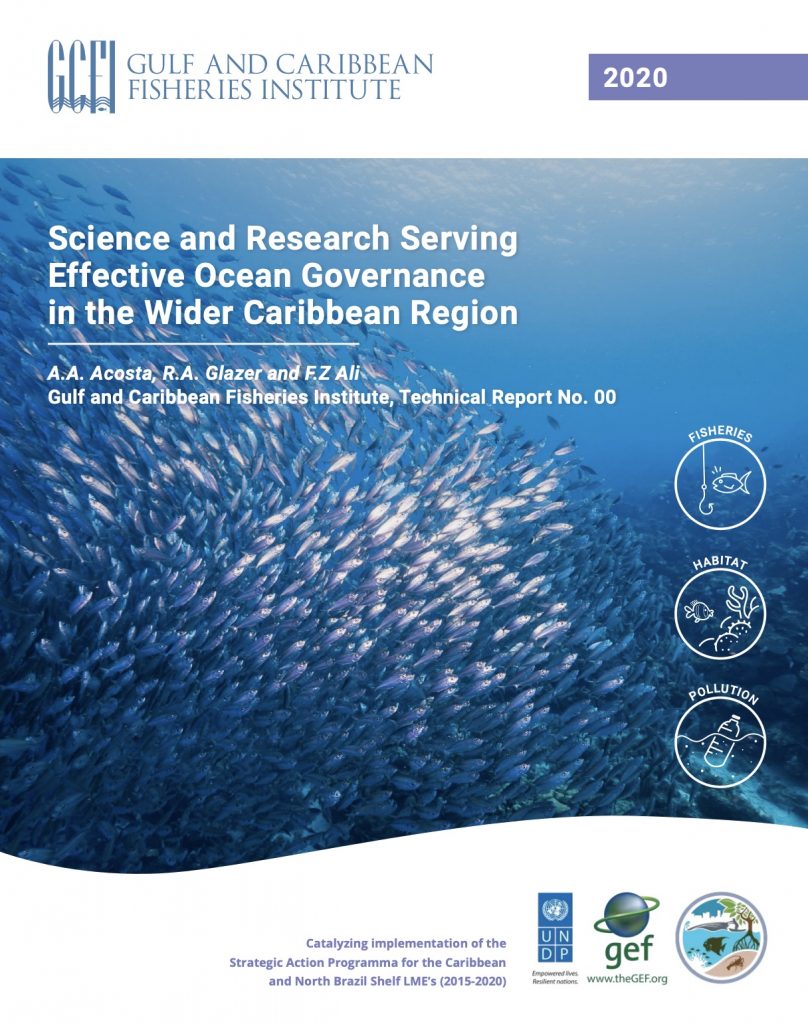
This report will intended to identify priority research topics and information gaps from the perspective of decision makers. Ultimately, the goal is that this information will be useful for identifying those areas of research which provide the greatest value in developing effective and implementable policy.
We invite you to read a draft document here and stay tuned as more information will be shared in this section.
The final document will be made available accordingly.
The CLME+ Hub is an initiative of the Secretariat of the CLME+ Interim Coordination Mechanism (ICM), in collaboration with the CLME+ ICM and CLME+ Project Executive Group (PEG) and (prospective) Partner Organizations.. Development of the Hub has benefited from the financial support of the UNDP/GEF Project: “Catalysing Implementation of the Strategic Action Programme (SAP) for the Sustainable Management of shared Living Marine Resources in the Caribbean and North Brazil Shelf Large Marine Ecosystems” (CLME+ Project, 2015-2020). The CLME+ Project is executed by the United Nations Office for Project Services (UNOPS) in close collaboration with a large number of global, regional and national-level partners. For more information on the CLME+ Project click here