
Displaying 661-670 of 735 results
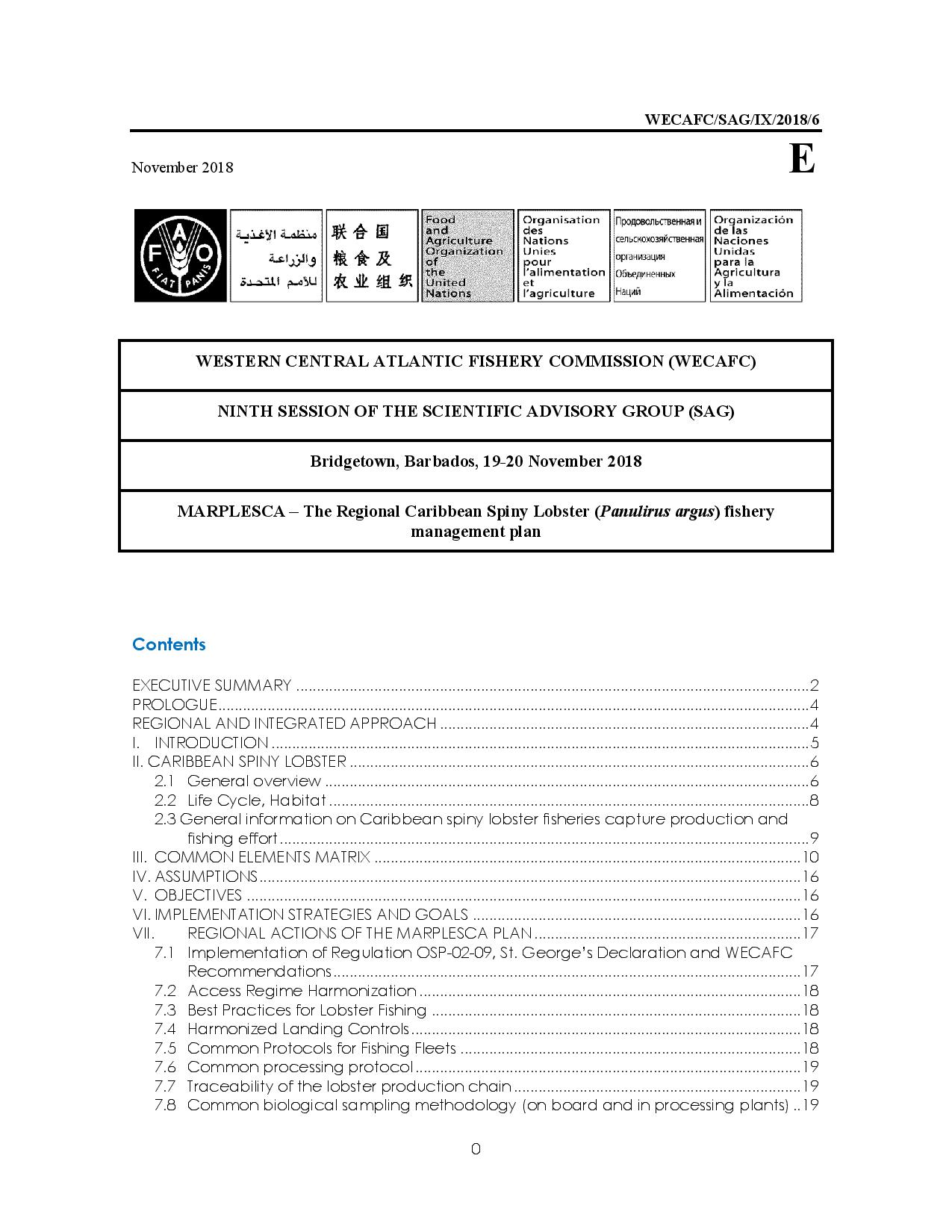
The Regional Caribbean Spiny Lobster (Panulirus argus) fishery management plan
This document presents the Caribbean Spiny Lobster Fishery Regional Management Plan (MARPLESCA plan) prepared under the "Ecosystem Approach for the Caribbean Spiny Lobster Fisheries subproject (aka ECOLANGOSTA +)", which is executed in the framework of the " Shared Living Marine Resources of the Caribbean and North Brazil Shelf Large Marine Ecosystems (CLME +)” and the implementation of the Strategic Action Program 2015-2025 of the CLME region.
 1
1


 Report issue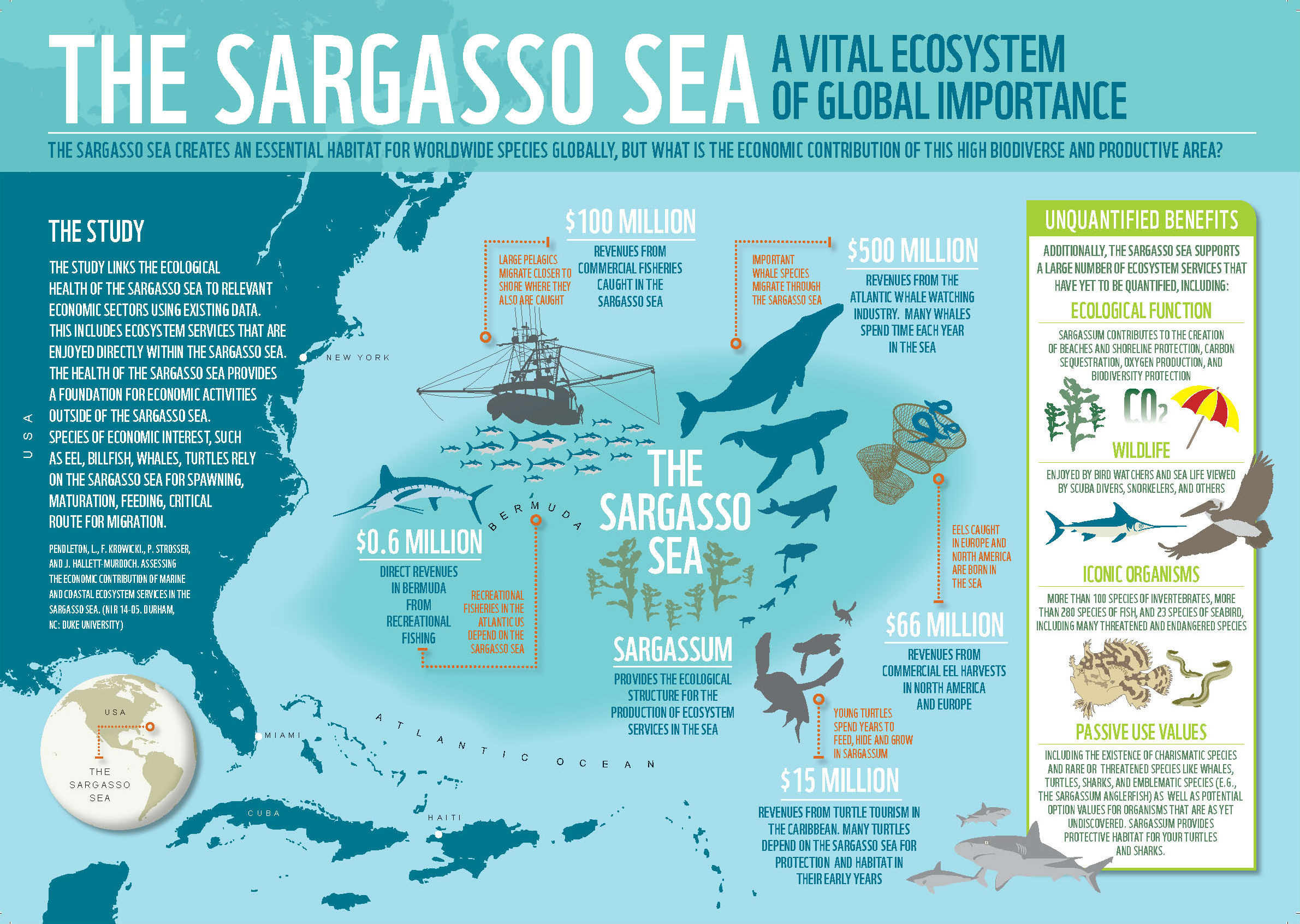
The Sargasso Sea – A Vital Ecosystem Of Global Importance (Infographic)
The Sargasso Sea creates an essential habitat for worldwide species globally. This infographic shows its the economic contribution of this high biodiverse and productive area.
Report issue
The Science we Need for the Ocean We Want: The United Nations Decade of Ocean Science for Sustainable Development (2021-2030)
On 5 December 2017, the United Nations declared that a Decade of Ocean Science for Sustainable Development would be held from 2021 to 2030. This Decade will provide a common framework to ensure that ocean science can fully support countries to achieve the 2030 Agenda for Sustainable Development. The Decade will provide a ‘once in a lifetime’ opportunity to create a new foundation, across the science-policy interface, to strengthen the management of our oceans and coasts for the benefit of humanity.
2
Report issue
The State of Biodiversity in The Caribbean Community – A Review of Progress Towards the Aichi Biodiversity Targets
The Report highlights achievements, good practices, success stories and lessons learnt that can be shared, as examples, among the countries in the Region, and with countries outside the Region. It also recognizes that we face challenges, including of resources and capacity, but also as a result of the impacts of climate change and the increased frequency of severe weather events.
Report issue
The Sunken Billions – The Economic Justification For Fisheries Reform
The purpose of this study is to raise the awareness of decision makers regarding the economic dimensions of the crisis in the world’s marine capture fisheries.This study estimated the difference between the potential and actual net economic benefits from global marine fisheries using 2004 as the base year. The estimate was made using a model that aggregated the world’s highly diverse fisheries into a single fishery. This made it possible to use the available global fisheries data such as production, value of production, and global fisheries profits as inputs to the model.
4
Report issue
The Sunken Billions Revisted – Progress and Challenges in Global Marine Fisheries
The primary objective of this study is to reinforce the messages of the 2009 publication and to catalyze calls for accelerating and scaling up the international effort aimed at addressing the global fisheries crisis. The analysis reveals economic losses of about $83 billion in 2012, compared with the optimal global maximum economic yield equilibrium. These sunken billions represent the potential annual benefits that could accrue to the sector following both major reform of fisheries governance and a period of years during which fish stocks would be allowed to recover to a higher, more sustainable, and more productive level. These stocks cannot be recovered immediately, even if ideal sector governance were somehow imposed overnight. Rather, the process of recovery implies large transition costs and long-term sector restructuring.
1
Report issue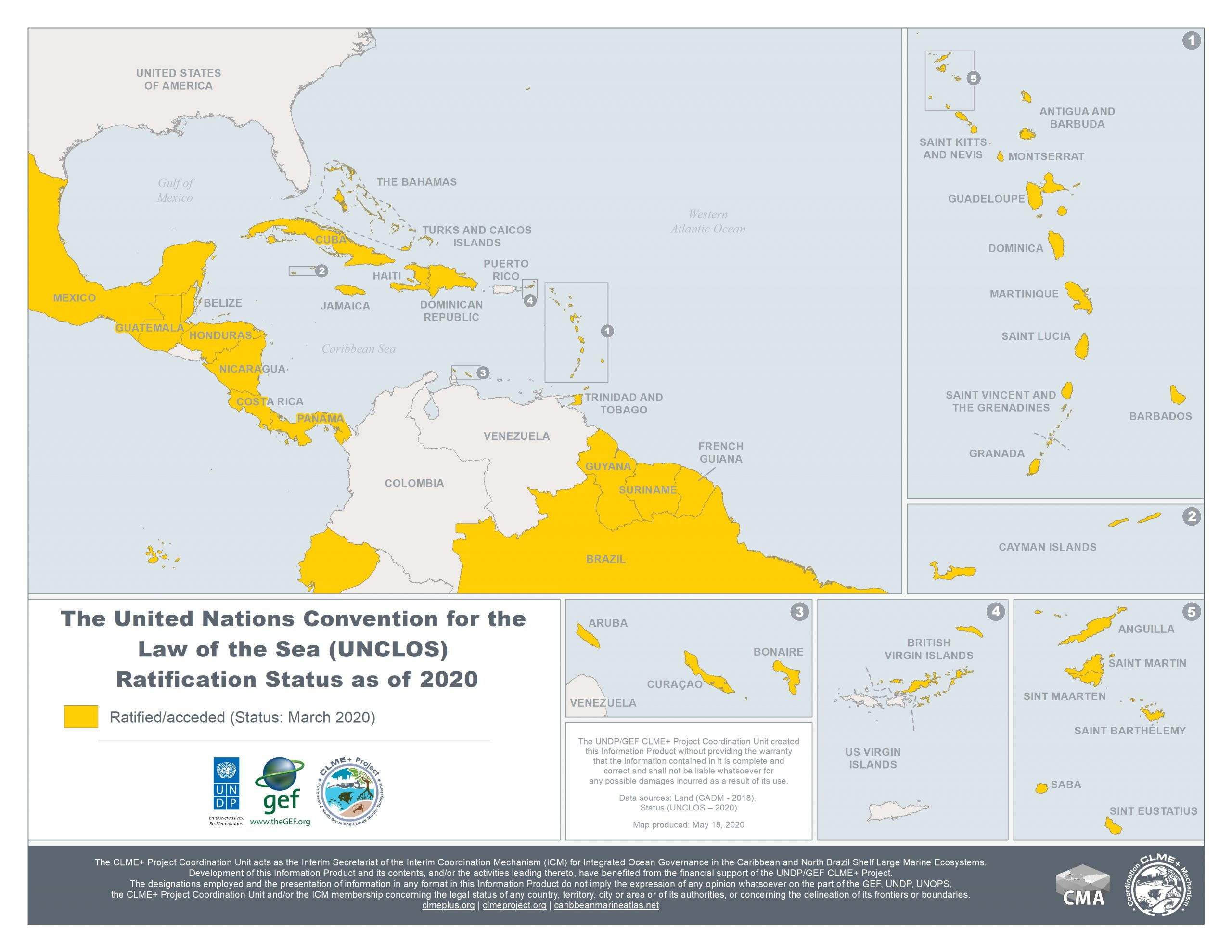
The United Nations Convention for the Law of the Sea (UNCLOS) Ratification Status as of 2020
To date no abstract has been uploaded for this document
Report issue
The Use And Design Of Rigths And Tenure Based Management Systems For Transboundary Stocks In The Caribbean
This document provides the findings and recommendations from a desk study carried out in support of the Caribbean Billfish Project. It includes an analysis of the motivating factors for rights based approaches in order to address the common pool fishery problems which dissipate rents. Human action depends on the fisheries management approaches followed. The study recognizes that it is a challenge to apply rights based approaches in the developing world. The author states that the answer is to secure rights to the fishery to end the race to fish and to put proper incentives in place to increase wealth and sustainability. The document also describes the characteristics of strong rights and several rights based approaches in commercial and recreational fisheries for billfish.
Report issue
The Valuation of Marine Ecosystem Goods and Services in the Caribbean: A review and framework for future work
This report provides a summary of economic analyses of marine ecosystem services in the Wider Caribbean Region for the three major marine ecosystem types being addressed by the Caribbean Large Marine Ecosystem (CLME) Project: reef, pelagic and continental shelf. Particular attention is given to empirical valuation studies. An overview of existing valuation methodologies is provided, along with recommendations for applications in the in the CLME Project area. Advantages and disadvantages of alternative methods are discussed. Market and non-market valuation studies from peer-reviewed journals, proceedings, government archives and university databases are reviewed. Attention is also given to other empirical work at the nexus of economics and marine resources in the Caribbean such as the use and effects of economic incentives, economic impact studies, and conservation finance. Studies reviewed for this report include analyses of primary and secondary data, benefits transfer applications, meta-analyses and case studies. Gaps, deficiencies and unknowns in the extant literature are highlighted and discussed. The summary and analysis of gaps together form a framework for valuation in the Wider Caribbean Region so that future work can be directed toward areas of policy importance.
7
Report issue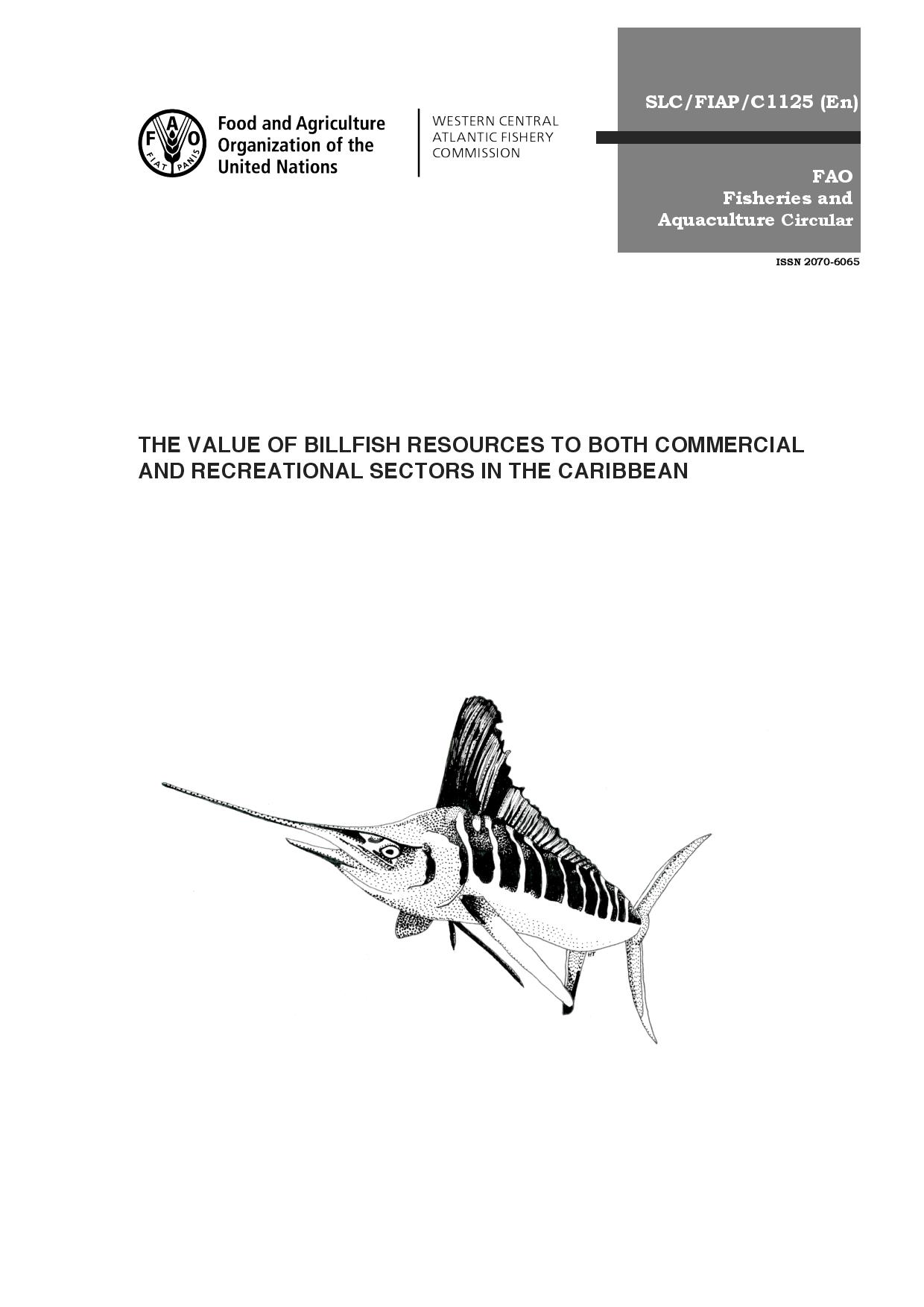
The Value of Billfish Resources to Both Commercial And Recreational Sectors in The Caribbean
The study carried out a comparison of the value estimated both in recreational and commercial fisheries for billfish in the Caribbean. The recreational value was found to be much higher than the value in the commercial sector but total estimates should be treated with caution due to the uncertainty of the raw data available. Enough value exists in recreational sector to compensate losses in commercial sector. Billfish commercial fishery responsible for much less than one percent of total Caribbean seafood value (between 0.36 percent and 0.84 percent). Most recreationally caught billfish released with high survival. In general, there is a need for better data regarding landings, effort, supply chain in both sectors.
Report issue