
Displaying 701-710 of 735 results
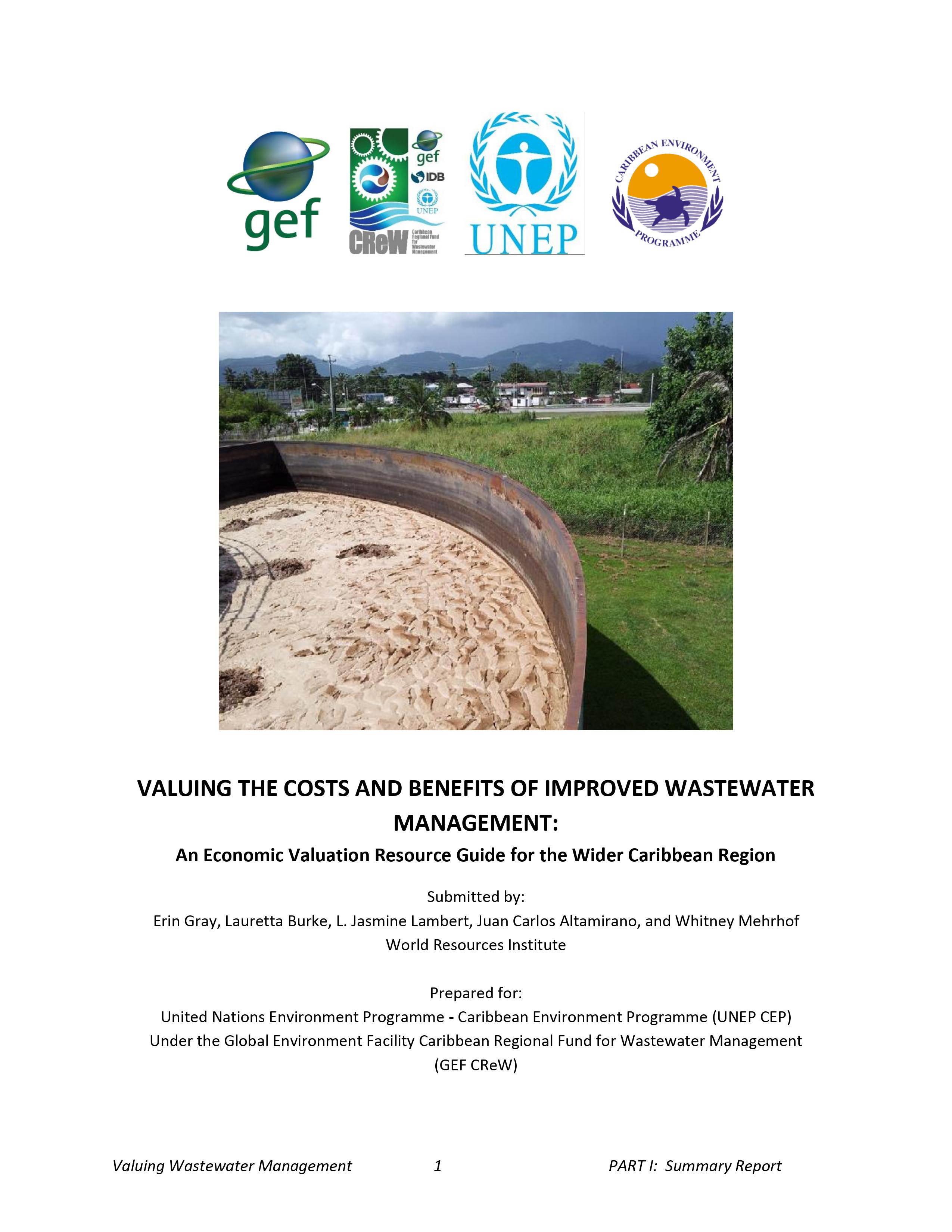
Valuing The Cost and Benefits of Improved Wastewater Management: An Economic Valuation Resource Guide for the Wider Caribbean Region
Wastewater management in the Wider Caribbean Region is a major challenge – the lack of resources and infrastructure to properly treat wastewater has led to water pollution resulting in negative impacts to important coastal and freshwater ecosystems and to human health. Across the region, 80% of domestic wastewater entering the Caribbean Sea remains untreated; 51.5 % of households lack sewer connections; and only 17% of households are connected to acceptable collection and treatment systems (GEF CREW 2012).
 1
1


 Report issue
Valuing The Costs and Benefits Of Improved Wastewater Management: An Economic Valuation Resource Guide for the Wider Caribbean Region Part II: Economic Valuation Methodology Guidance
To date no abstract has been uploaded for this document
Report issue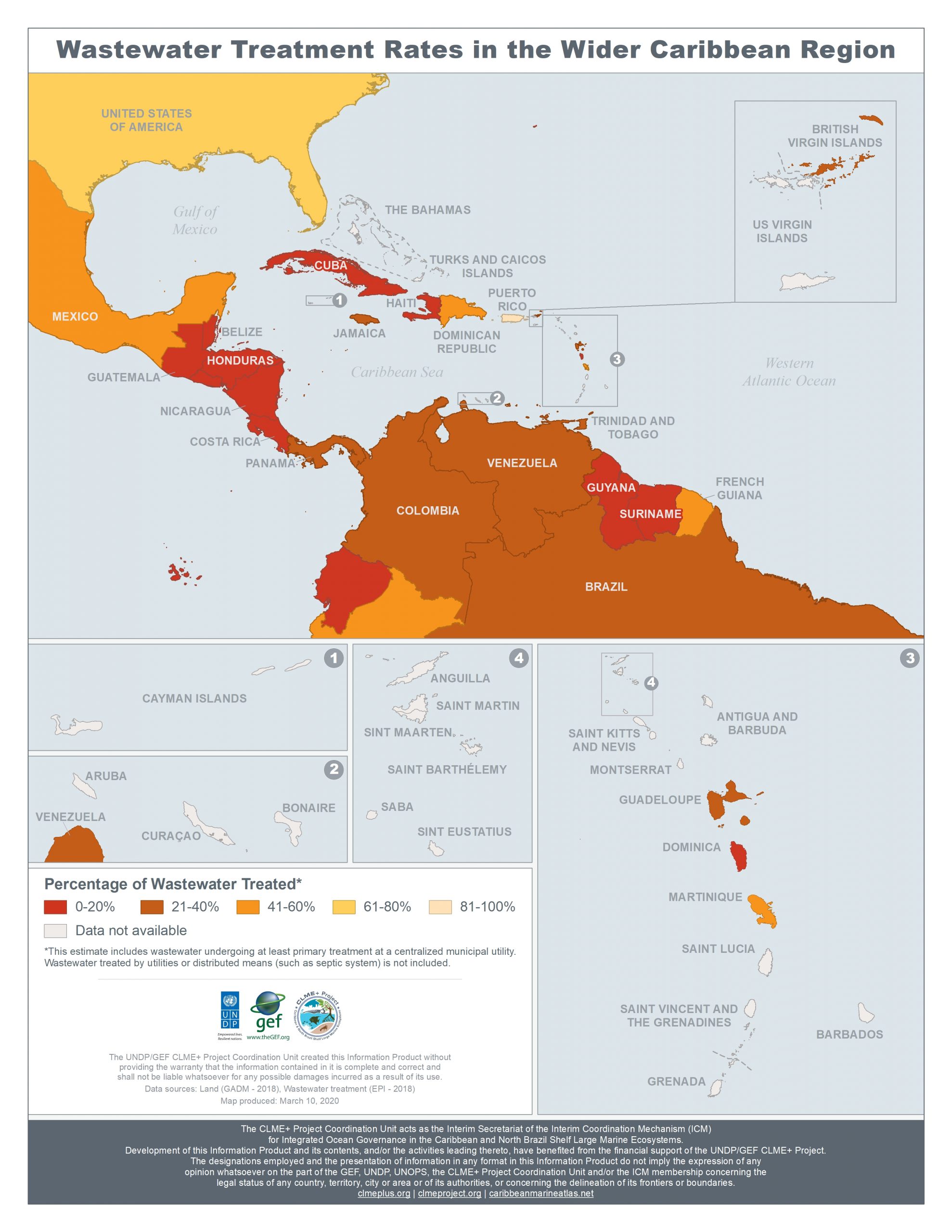
Waster Treatment Rates in the Wider Caribbean Region
To date no abstract has been uploaded for this document
Report issue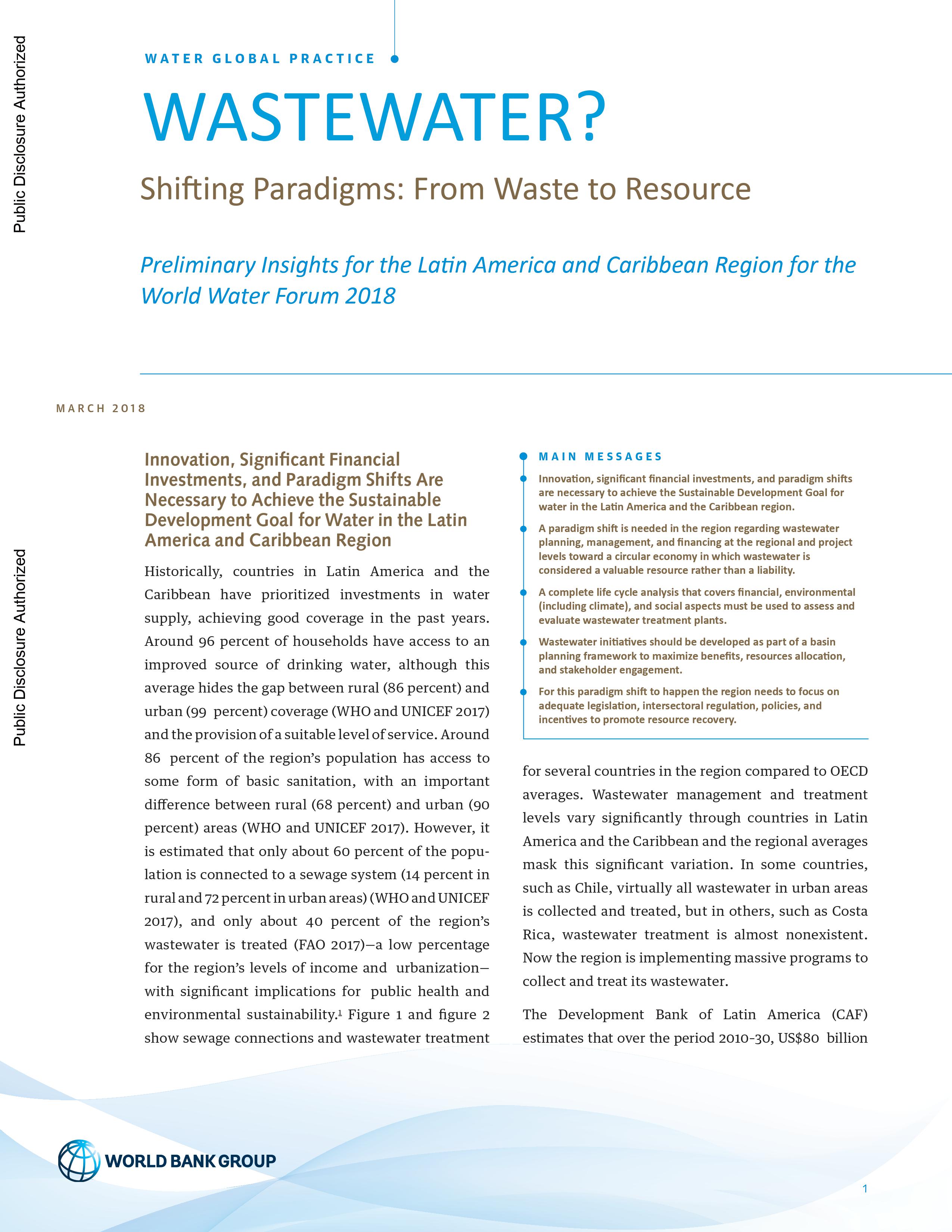
Wasterwater – Shifting Paradigms: From Waste to Resource
Innovation, Significant Financial Investments, and Paradigm Shifts Are Necessary to Achieve the Sustainable Development Goal for Water in the Latin America and Caribbean Region
Report issue
Wastewater Management A UN-Water Analytical Brief
The report is structured into eight sections. The first two sections provide the context of the report and look, briefly, at why poor wastewater management is a problem. Section 3 builds on the Introduction and sets out the current situation – in terms of water quality issues and considers the main wastewater components (domestic, industrial and agricultural) in turn. Section 4 outlines some of the wastewater management options available and discusses aspects that need to be considered before implementing a system. Section 5 highlights the potential that wastewater has as a valuable resource. Section 6 looks at how wastewater management is being considered in the context of the Post-2015 Development Agenda and section 7 brings together some of the issues that need to be considered in acting upon wastewater management and water quality issues, including the need for strong governance and data gathering. Finally, section 8 presents the conclusions of the report and highlights the need to prioritize wastewater management.
Report issue
Wastewater Reuse in the Eastern Caribbean: a Case Study
Wastewater reuse is now widely recognized as an important source of water supply in water-scarce countries and a solution to environmental problems associated with untreated wastewater discharge. In the Eastern Caribbean, competition for potable water between tourism and local domestic needs has seen a growth of desalination treatment plants. The need for water by the tourism sector peaks during the dry season when availability is at its minimum.This paper discusses the potential of wastewater reuse in the main tourism-dependent islands in the Eastern Caribbean. The nexus between desalination and wastewater reuse allows the hotels and resorts sector to reduce the overall costs of water supply, overcome shortages in the dry season and meet stringent wastewater disposal requirements, as it was found that wastewater reuse can meet up to 38% of total needs. In many of the islands, there are suitable conditions for promoting wastewater reuse.
Report issue
Wastewater The Untapped Resource – The United Nations World Water Development Report 2017
The 2017 edition of the United Nations World Water Development Report (WWDR) explores the issue of wastewater and its potential as a sustainable resource.Wastewater is not merely a water management issue – it affects the environment and all livingbeings, and can have direct impacts on economies, both mature and emerging. Furthermorwastewater flows contain a number of useful materials, such as nutrients, metals and organicmaterial that, much like the water itself, can be extracted and used to for other productive purposes. As such, wastewater constitutes a valuable resource that, if sustainably managed, is setto become a central pillar of the circular economy. The upside to improving the way we managewastewater is huge, with potential co-benefits to societies and the environment.
Report issue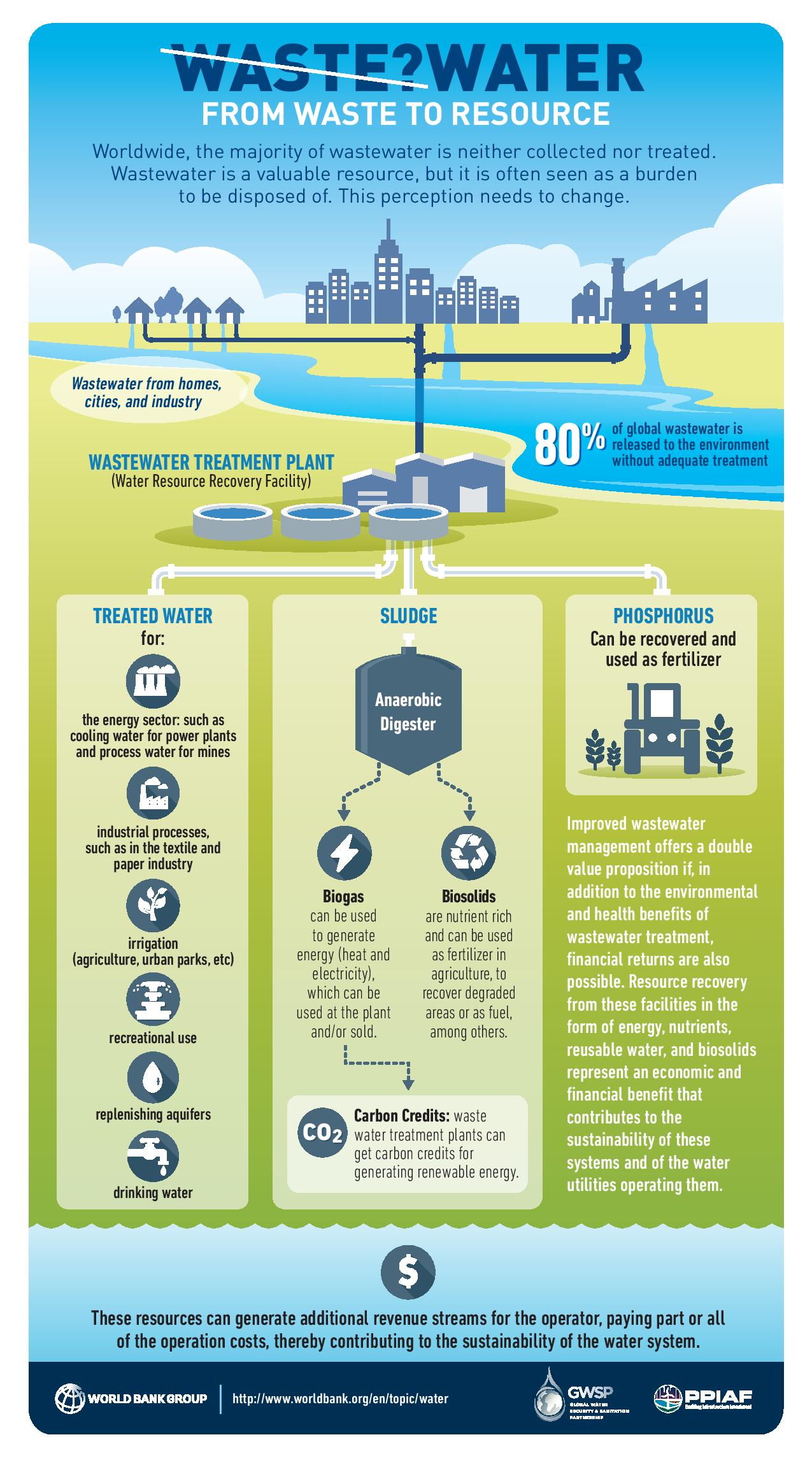
WasteWater: From Waste to Resource
Worldwide, the majority of wastewater is neither collected nor treated. Wastewater is a valuable resource, but it is often seen as a burden to be disposed of. This perception needs to change.
Report issue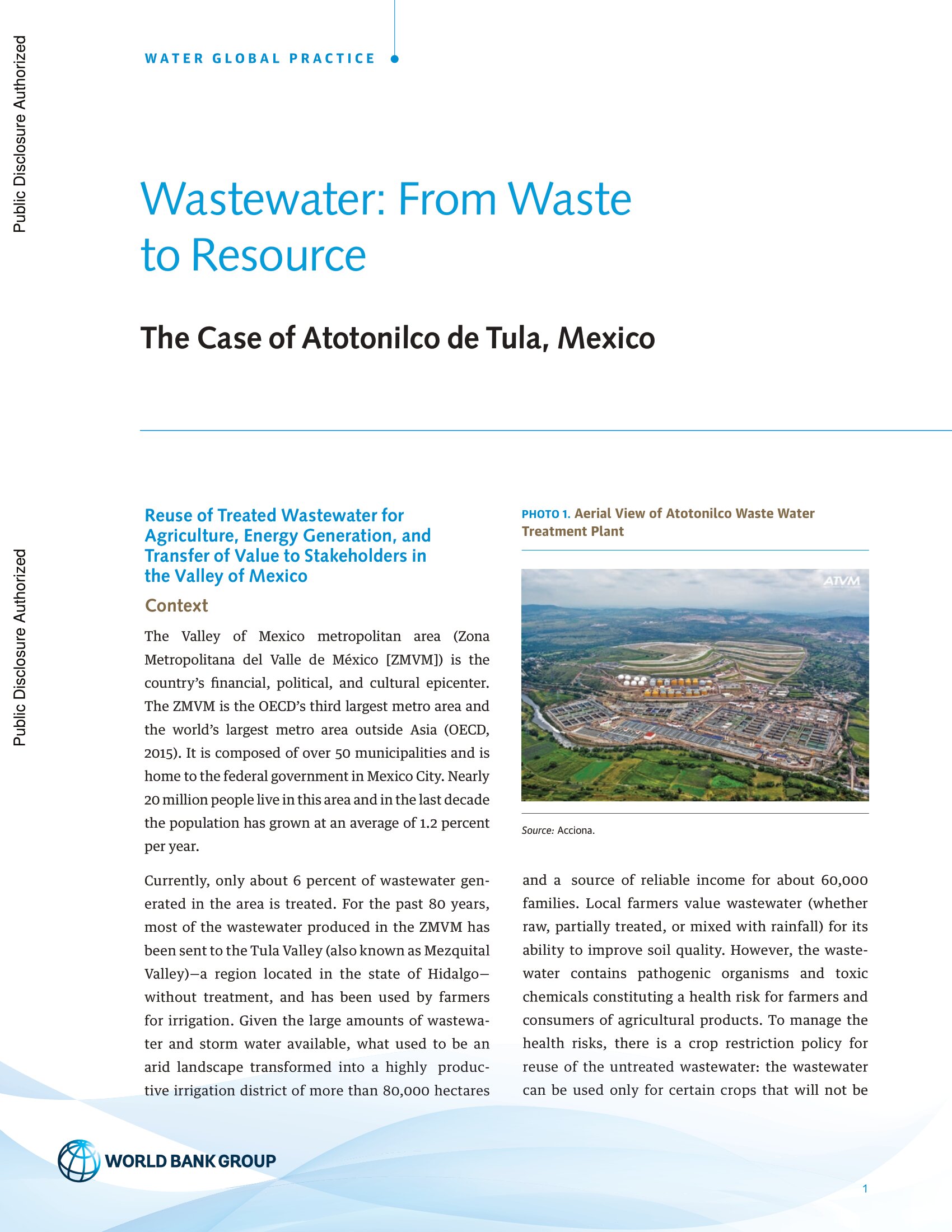
Wastewater: From Waste to Resource – The Case of Atotonilco de Tula, Mexico
The Valley of Mexico metropolitan area (Zona Metropolitana del Valle de México [ZMVM]) is the country’s financial, political, and cultural epicenter. The ZMVM is the OECD’s third largest metro area and the world’s largest metro area outside Asia (OECD,2015). It is composed of over 50 municipalities and is home to the federal government in Mexico City. Nearly 20 million people live in this area and in the last decade the population has grown at an average of 1.2 percent per year. This Document shows the Reuse of Treated Wastewater for Agriculture, Energy Generation, and Transfer of Value to Stakeholders in the Valley of Mexico.
Report issue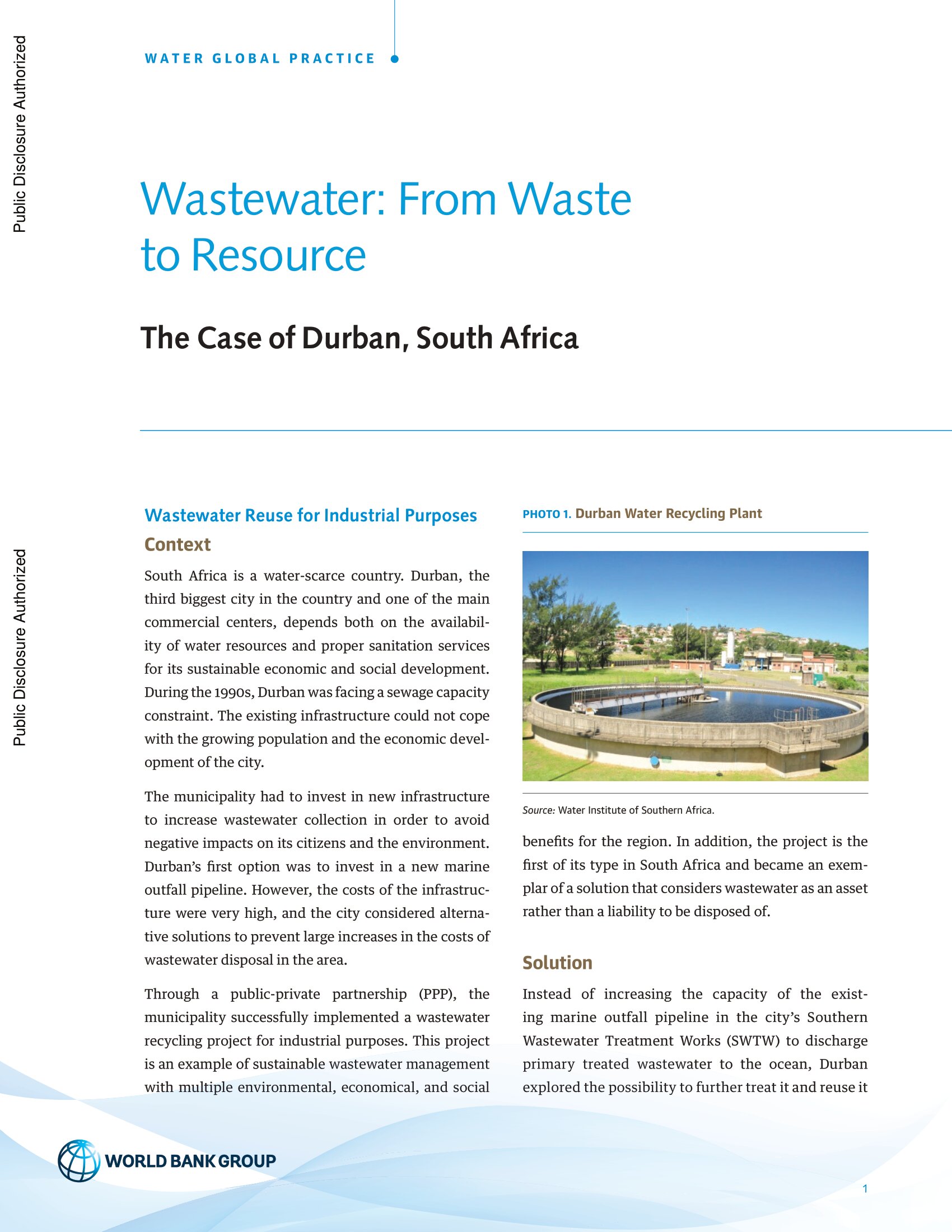
Wastewater: From Waste to Resource – The Case of Durban, South Africa
South Africa is a water-scarce country. Durban, the third biggest city in the country and one of the main commercial centers, depends both on the availability of water resources and proper sanitation services for its sustainable economic and social development. During the 1990s, Durban was facing a sewage capacity constraint. The existing infrastructure could not cope with the growing population and the economic development of the city.
Report issue