
Displaying 721-730 of 735 results
WECAFC Data Collection Reference Framework
To date no abstract has been uploaded for this document
 1
1


 Report issue
WECAFC Fishery Data and Statistics Working Group (FDS WG)
To date no abstract has been uploaded for this document
Report issue
WECAFC Fishery Data and Statistics Working Group (FDS WG) – First meeting of the WECAFC Fisheries Data and Statistics Working Group (Presentation)
Presentation of The First meeting of the WECAFC Fisheries Data and Statistics Working group. Objectives of the 1st meeting of the FDS WG are: • Develop consensus upon the WG ToR and outline the priorities in supporting collection of fisheries data and statistics in the WECAFC region; • Review and validate minimum data requirements in support to fisheries management and stock assessment with related policies and guidelines for implementation; • Review existing technical solutions developed to collate and share minimum data requirements (Regional Databas • Identify priorities (in terms of filling gaps in knowledge on a variety of topics, species, fisheries, and ecosystems) for fisheries data collection and statistical analysis in the WECAFC area.
Report issue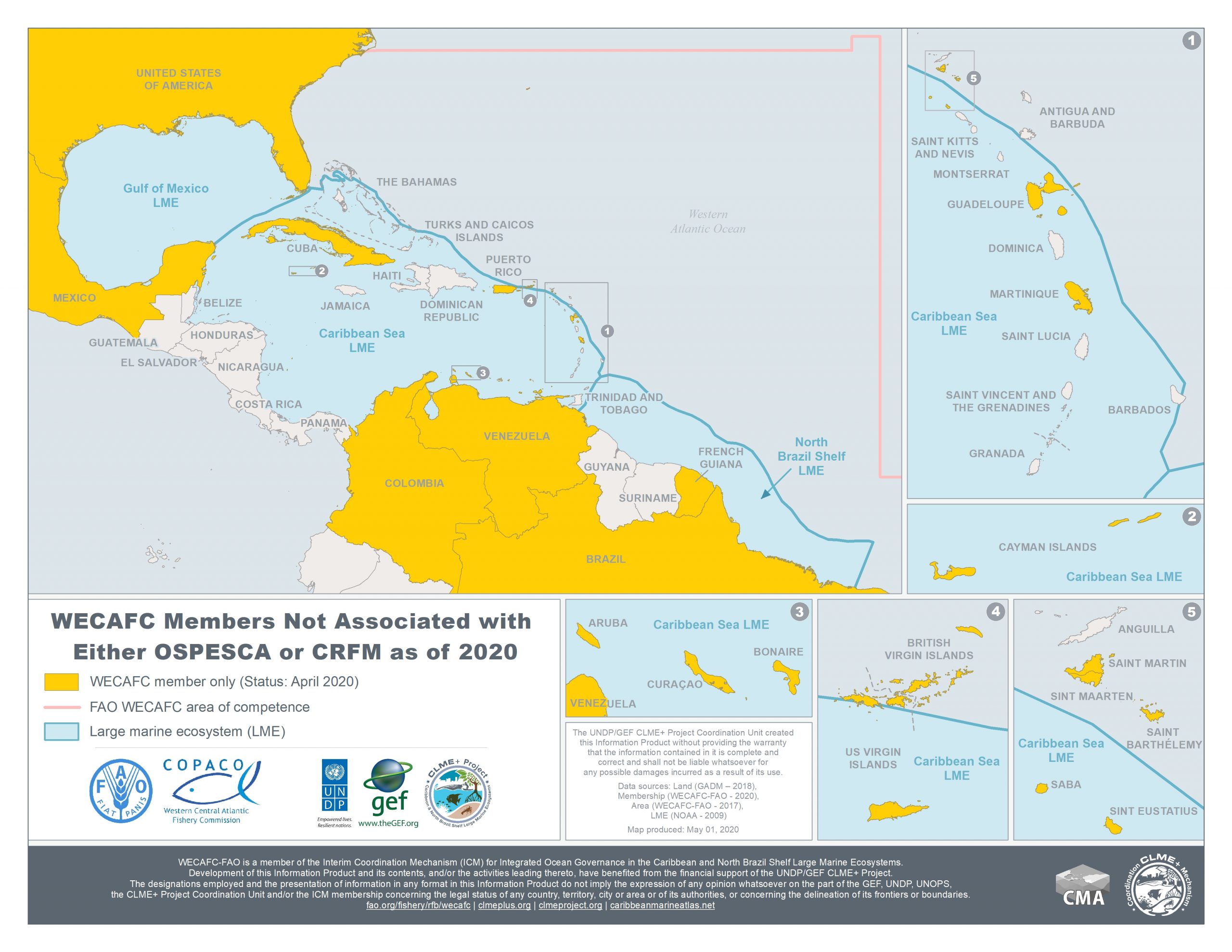
WECAFC Members Not Associated with Either OSPESCA or CRFM as of 2020
To date no abstract has been uploaded for this document
Report issue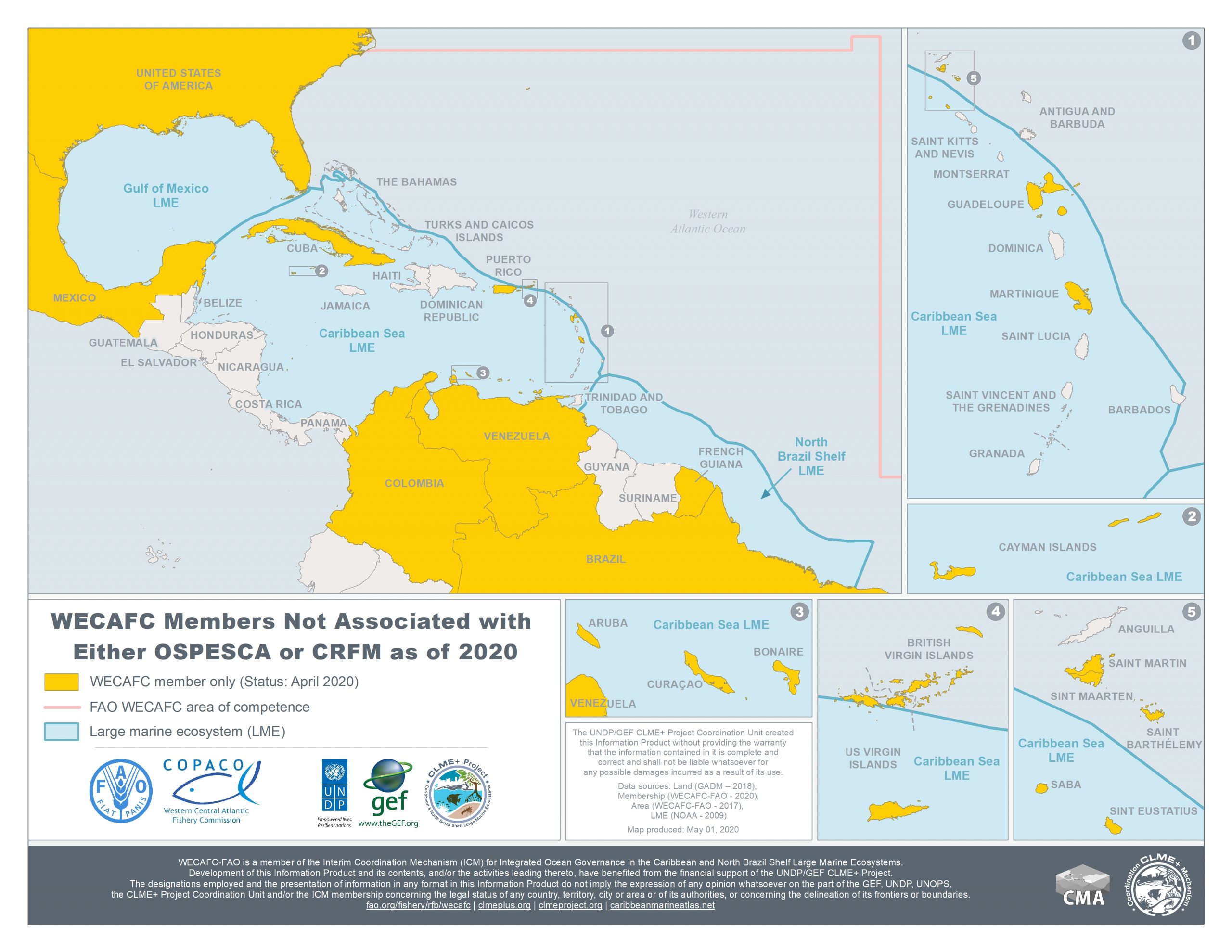
WECAFC Members Not Associated with Either OSPESCA or CRFM as of 2020
To date no abstract has been uploaded for this document
Report issue
WECAFC Regional Data Access and Sharing Policies
To date no abstract has been uploaded for this document
1
Report issue
WECAFC Regional Data Access and Sharing Policies
As governing instruments, data access and sharing policies are meant to set principles and boundaries which shall govern the in and-out flow of data by the WECAFC community, data security and confidentiality aspects, collaborative work through data sharing, and publishing.
Report issue
WECAFC Regional Data Sharing and Access Policies
WECAFC member countries recognized in the 1970s and 1980s that without the necessary data and information, it would be impossible for the countries in the region to manage their shared fisheries. Following major investments by the countries, with support from the Danish Government (DANIDA) capacity building projects and the FAO/Norway EEZ programme (1982 -1985), the availability of data and information on the status of the stocks and the fisheries improved significantly.The proposed WECAFC data management and related Regional Data Sharing and Access Policies respond to international and regional data strategies including, in a context of multiple reporting requirements, the need for streamline data reporting, as well as collaboration and harmonization among RFBs and other national and regional institutions involved in improving the state of marine resources (WECAFC-CRFM-OSPESCA MoU) and that of the marine environment (SAP). Fostering public awareness while providing access to the underlying scientific evidence, and involving stakeholders in the collection and ownership of data processes feature high in those strategies, described below.
Report issue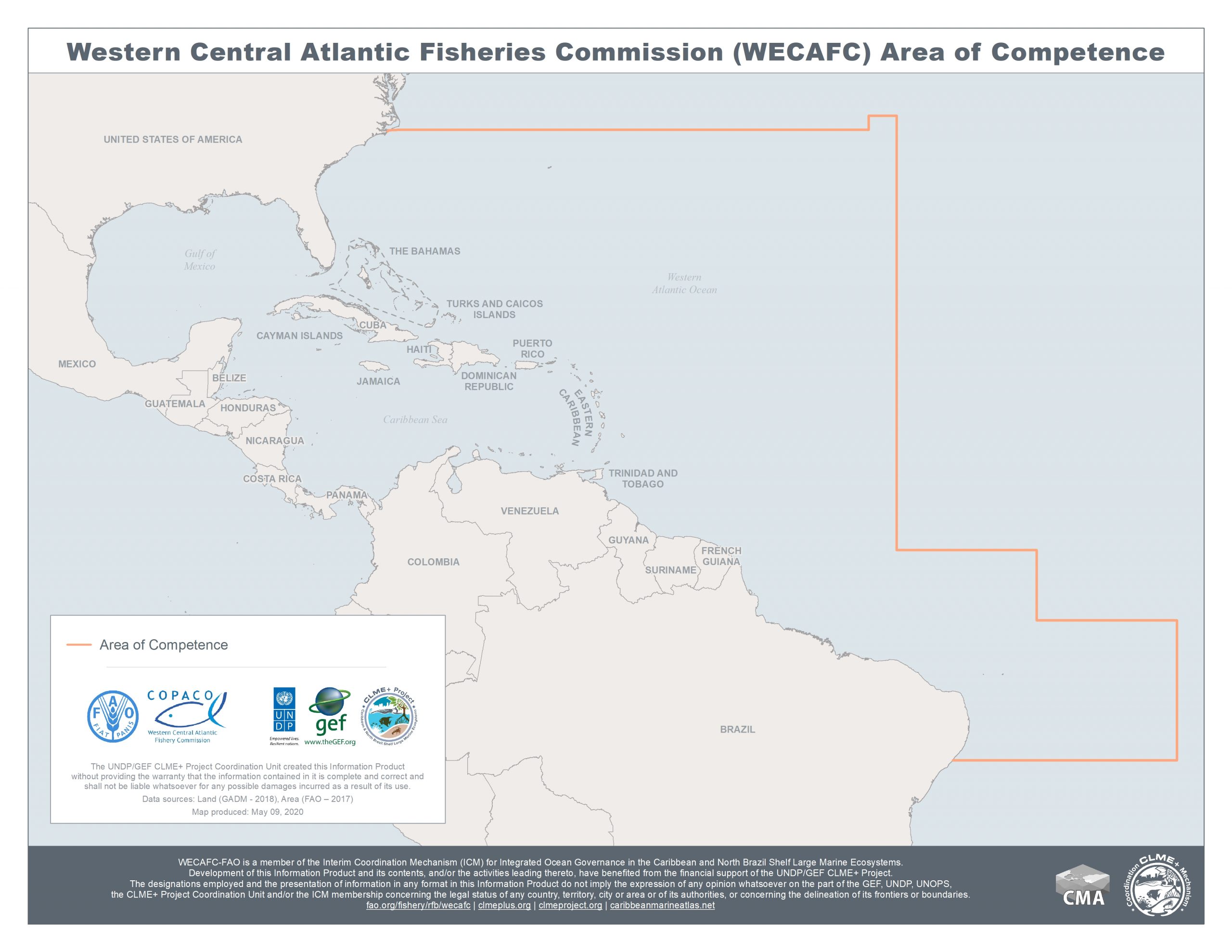
Western Central Atlantic Fisheries Commission (WECAFC) Area of Competence
To date no abstract has been uploaded for this document
Report issue
What Works In Water And Ocean Governance – Impact Stories from the UNDP Water and Ocean Governance Programme
This report reviews a selected set of projects under the umbrella of the Water and Ocean Governance Programme (WOGP), with a view to exploring what has worked on the ground in terms of assisting countries and stakeholders to reform their water and ocean governance frameworks. The analysis inserts the reported transformation into the steps of the WOGP theory of change, as a way of identifying the factors that helped stakeholders improve their way of interaction and realize governance reforms.
Report issue